
Play Therapy
Understanding the power of play in children's emotional development
Why Play is Important
Play is vital for a child's development, allowing children to learn, experiment, and express themselves.
Play allows children to:
Express Themselves
Play gives them a safe space to articulate feelings they may struggle to verbalise.
Regulate Emotions
Through play, children learn to manage their emotions and develop resilience.
Build Social Skills
Engaging in play fosters cooperation, sharing, and conflict resolution.
Enhance Creativity
Imaginative play encourages problem-solving and innovative thinking.
Promote Cognitive Growth
Play enhances critical thinking, concentration, and memory.
Support Physical Health
Active play improves coordination and motor skills.
The Importance of Play in Therapy
Play is a natural medium for children and using it therapeutically can help them navigate emotional and psychological issues. Play Therapy meets children at their developmental level, particularly as their capacity for abstract thinking and understanding complex emotions is still developing.
In a therapeutic setting, play enables children to explore their feelings and experiences in a safe and comprehensible way. Through play and creative arts, children can express emotions they may struggle to verbalise, discovering new coping mechanisms for complex feelings. Recognising and understanding emotions is crucial for a child's growth, as emotions serve as signals guiding their responses to experiences. By grasping their feelings, children can make more conscious choices, reducing impulsive behaviours and unhealthy patterns. In play therapy, they learn to identify and process emotions, fostering coping strategies within a supportive environment, thus promoting healthier emotional development and resilience.

What is Play Therapy?
Play Therapy is a therapeutic approach that helps children with emotional and behavioural challenges express their feelings through play and creativity. It's rooted in Carl Rogers' work and further developed by Virginia Axline and her eight principles of non-directive Play Therapy.
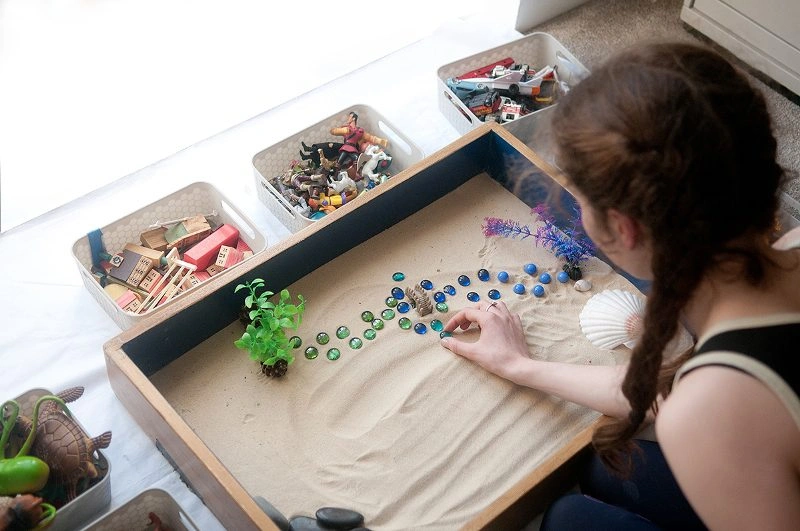
Play therapy uses play and creative art materials as primary tools for expression, especially beneficial for children who find it challenging to articulate their feelings. Guided by a trained Play Therapist using a carefully designed toolkit—including clay, art supplies, sand, musical instruments, games, construction toys, puppets, and dressing-up props—children can communicate their feelings, thoughts, and experiences. This approach not only aids in understanding their emotions but also fosters resilience and the ability to build healthy relationships.
Lizzie is trained in an Integrative Holistic model of Play Therapy which is validated by the Play Therapy UK (PTUK) and clinically evidence base. She works with both unconscious and conscious processes, using a combination of non-directive and directive approaches while integrating research with practice. The insights gained during therapy can reshape brain development, enhancing children's ability to manage emotions and stress in the future.
Child-Centered Play Therapy is evidence based and operates on 8 key principles devised by Virginia Axline:-
Therapeutic Relationship
A strong therapeutic relationship is key to effective therapy. Through extensive training and supervision Lizzie is trained to provide a safe space where children can explore their feelings without judgment helping children build confidence and process their emotions in a comfortable way. This supportive environment helps children feel understood and secure, enabling them to confront deep emotions.
Accepting the Child Completely
The therapist accepts the child exactly as they are.
Permissiveness
The therapist establishes a feeling of permissiveness in the relationship so that the child feels free to express their feelings completely.
Recognition and Reflection of Feelings
The therapist is alert to recognise the feelings the child is expressing and reflects those feelings back to them in such a manner that they gains insight into their behaviour.
Respect for the Child
The therapist maintains a deep respect for the child's ability to solve his own problems if given an opportunity to do so. The responsibility to make choices and to institute change is the child's.
Child-Led
The therapist does not attempt to direct the child's actions or conversation in any manner. The child leads the way; the therapist follows.
Work at the Pace that Suits the Child
The therapist does not attempt to hurry the therapy along. It is a gradual process and is recognised as such by the therapist.
Limitations
The therapist establishes only those limitations that are necessary to anchor the therapy to the world of reality and to make the child aware of their responsibility in the relationship.

Nature as a Co-facilitator in Therapy
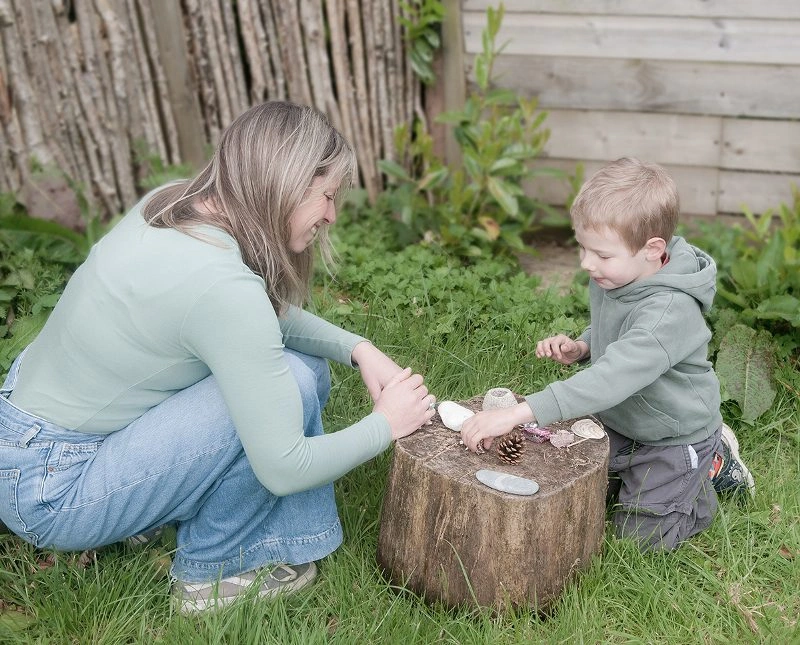
Lizzie is particularly passionate about utilising both indoor and outdoor spaces in her therapeutic approach. Through her research and professional experiences she believes in the profound benefits of nature, especially when supporting children's mental health and children's ability to self regulate.
Taking Play Therapy outside aligns with the growing body of evidence supporting the benefits of nature and responds to the contemporary challenges faced by children in an increasingly screen-dominated world. Outdoor environments include natural elements, mud, vegetation, wind, water and sunlight, all which may influence the therapeutic experience positively. By creating child-led environments in nature, Lizzie can facilitate opportunities for unstructured play, problem-solving and risk assessment, all vital for healthy development.
Whenever possible, Lizzie offers both indoor and outdoor spaces for therapy sessions to facilitate each child's unique therapeutic journey, helping them connect with their surroundings as part of the growth and healing process.
Issues Addressed by Lizzie Jennings' Therapy
Lizzie Jennings' Child Therapy effectively addresses a variety of challenges, including but not limited to:
Low self esteem and low confidence
Anxiety, stress, or phobias
Trauma
Withdrawal or unhappiness
Neurodiversity
Witnessing or experiencing abuse
Difficulty making friends
Nightmares or disturbed sleep
School avoidance
Risk of school exclusion
Parental separation or divorce
Bullying experiences
Adoption or fostering situations
Loss or bereavement
Attachment Issues